
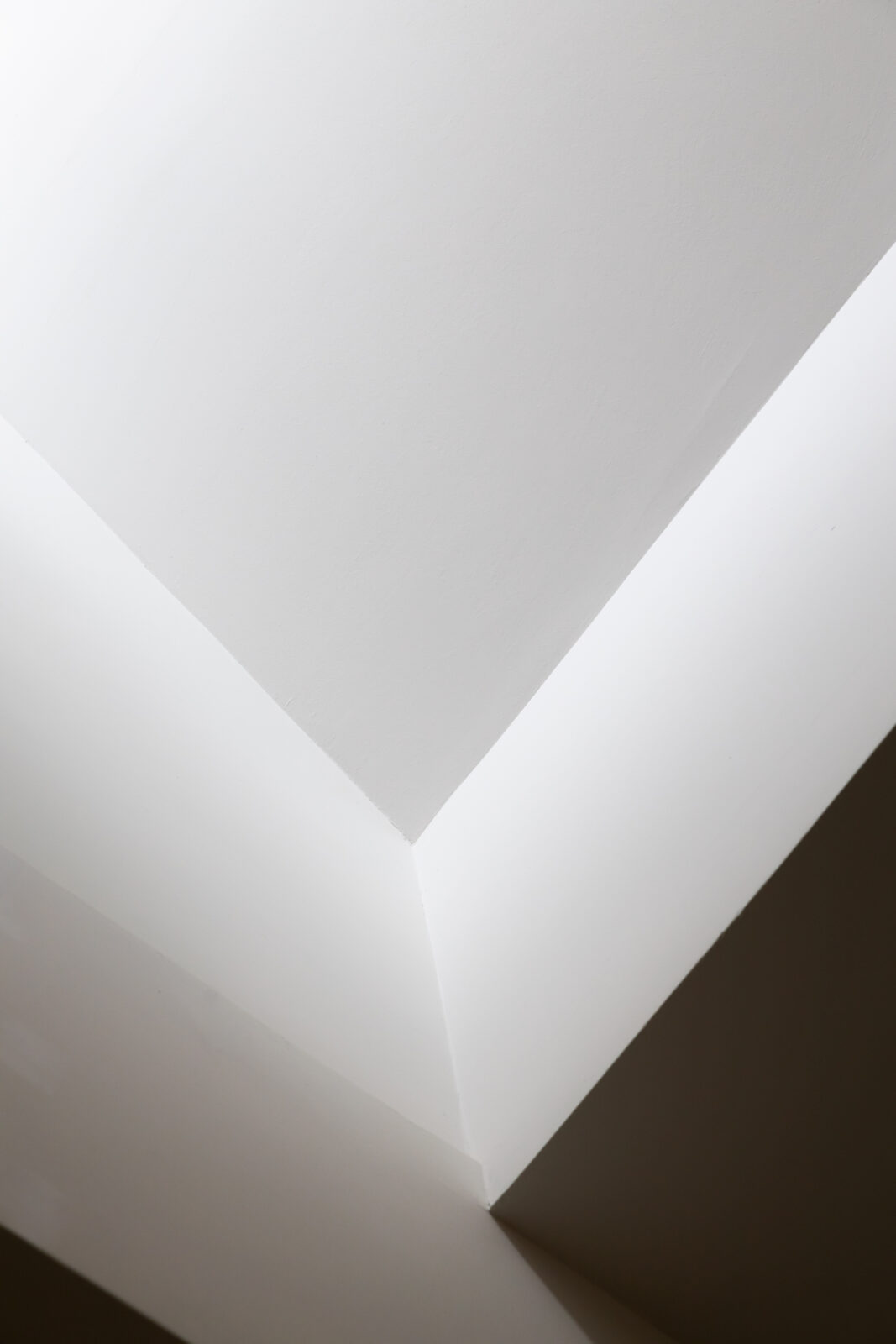
Architecture of Rajakartano
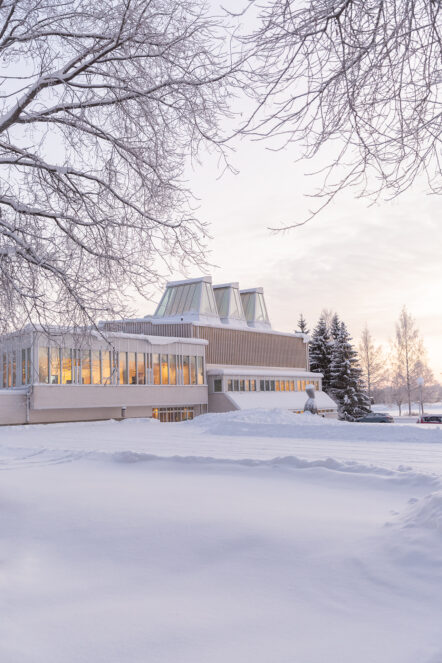
Rajakartano, the shared home of Aine Art Museum and Tornio City Library, will turn 40 in 2025. Over the years, the building has become one of the city’s landmarks. The positive and open attitude of the City of Tornio towards art and culture, active local operators, and the sizable art collection of Eila and Veli Aine contributed to the creation of this cultural centre and the activities it houses.
There had long been dreams of a cultural centre in Tornio, and there was a real need for a multi-purpose space. One party that was particularly active in pushing the matter forward was Tornio’s visual arts association – Tornion Kuvataideseura ry. In 1974, Tornio City Board set up its Museum Committee tasked with exploring and clarifying the need, location options and significance of a combined art museum and cultural centre for the City of Tornio, and the need for an extension to the Museum of Torne Valley, founded in 1914. The year 1974 also saw the foundation of Aine Pictorial Art Foundation by Elia and Veli Aine. The idea for a home for art and culture, Rajakartano, was born.
In 1977, the Museum Committee decided to propose a “centralised and diverse cultural centre in Suensaari, Tornio, near the Museum of Torne Valley.” The aim was to realise the cultural centre in stages, with the first stage to be completed by 1981, the year of the city’s 360th anniversary.
The agreement between the Aine Pictorial Art Foundation and the City of Tornio was signed on 23 October 1979. The agreement stated that the City committed to constructing museum-level exhibition and storage facilities for the art collection, as well as being responsible for the management of the collection and running the art museum. The foundation committed to permanently placing its art collection in the premises of the art museum.
The agreement stipulated that the exhibition facilities were to be located in the combined art museum and library building and that the construction of the exhibition facilities was to begin at the same time as the construction of the library, once a government building permit had been obtained for the construction of the library.
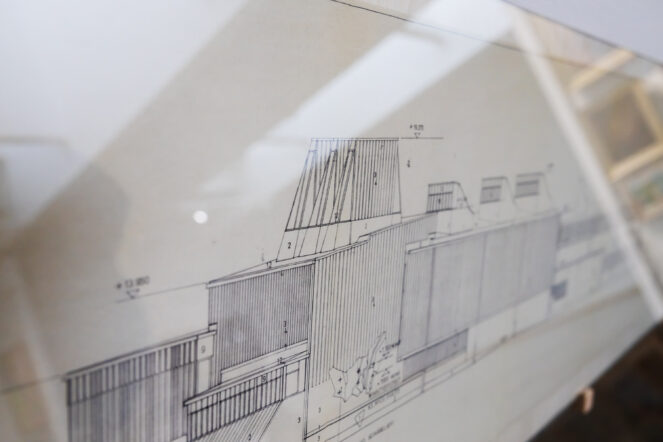
The City invited Tornio-based Architect Matti Porkka (b. 1937) and his architecture firm to design the art museum and library building. Porkka had previously worked for the architecture firm of renowned Finnish Architect Alvar Aalto, among others.
The building permit for the cultural centre was obtained in the spring of 1984 and construction work started immediately. Despite the intensely cold winter, the construction work progressed quickly. According to contemporary memories from the construction period, the cold winter drove even the water-dwelling muskrats that lived in the city’s bay to seek warmth in the foundations of the building.
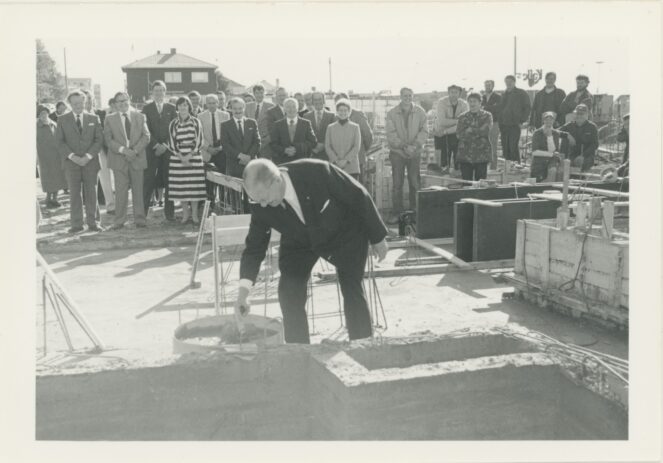
The topping out ceremony for the building was held on 3 May 1985. Structurally, the building was completed in late 1985. The original cost estimate for the joint library and art museum was 23 million Finnish markka, but it ultimately ended up costing much less – 17.5 million markka.
Aine Art Museum was opened in the brand-new Rajakartano building on 8 March 1986. The people of Tornio’s dream of having their own versatile cultural centre had become a reality.
Name: Rajakartano
The joint art museum and library, which was completed in 1985, needed a name, so in March 1985, the City held a naming competition, in which 80 proposals were received. The prize was 300 Finnish markka. The proposals included ideas honouring Eila and Veli Aine, who had collected the art, with suggestions such as Ainela, Arsaine and Velipoika, as well as names combining two concepts of the art museum (’taidemuseo’ in Finnish) and library (’kirjasto’ in Finnish), such as Tornion Kirmu, Taipumus-talo and Tamuski. Names inspired by the northern location of the venue were also popular, such as Tornedalia, Arctica, Birkka and Kveenitalo. The competition jury consisted of members of the working group that organised the annual festival celebrating the city, as well as Chair of the Library Board Mirjam Kälkäjä and Library Director Sanni Pajari-Sariola.
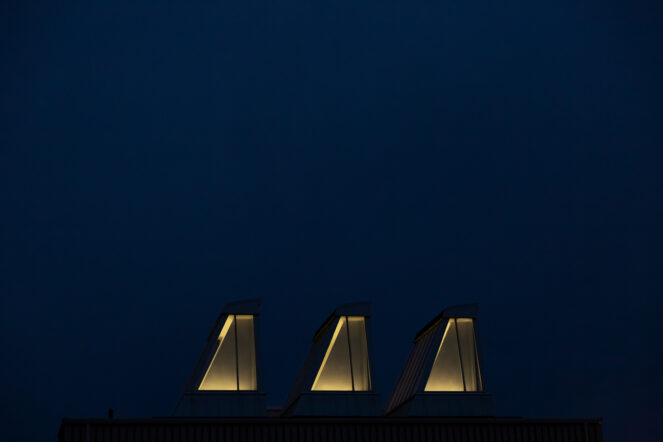
Tornio City Board was tasked with making the final decision on the name of the building, with Rajakartano and Torna-talo/Torna-hus, both inspired by the city’s close ties with and location on the border with Sweden, chosen as the finalists.
Ultimately, Rajakartano (’border manor’), proposed by someone going by the pseudonym ’Nuuskuhuuli’, was chosen as the winner. The Aine Pictorial Art Foundation supported the choice of name, and Tornio City Board made its final decision. At the same time, it was decided that the largest auditorium in the museum would be named the Aine Hall.
Dividing the facilities
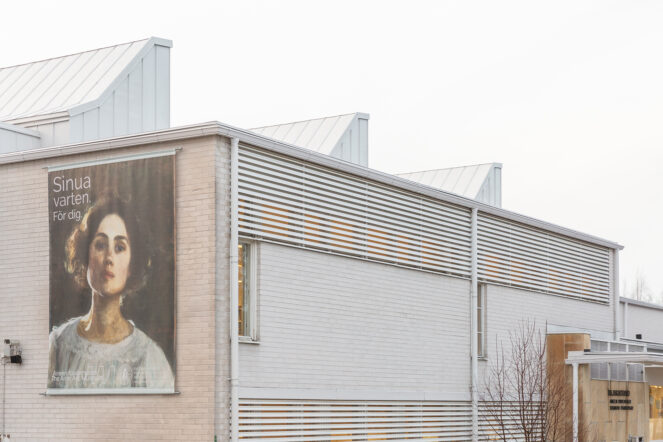
The Rajakartano building is made up of two entities of approximately equal size, a library and an art museum, slightly inclined towards each other and each with its own character. The overall colour scheme of the building is very light, with white sand-lime bricks used for the walls.
For prominent businessman and art collector Veli Aine, one source of inspiration for the art museum building was Helsinki Art Museum’s exhibition spaces in Meilahti. Sara Hildén Art Museum in Tampere and the museum now known as the Museum of Fine Arts Eemil in Lapinlahti also provided ideas for the new venue in Tornio. It is said that Veli Aine knew exactly what he wanted from the building and, for example, the auditorium on the ground floor was his idea and followed his stipulations.
Veli Aine felt that the direction of travel was important in the exhibition spaces; he wanted a so-called ’forced route’ in the exhibition halls, ensuring visitors would see all the works. Architect Matti Porkka also designed swing doors between the spaces, which could be used to change the route or have several routes if needed. However, the doors were fairly soon found to be impractical and have remained hidden behind the walls ever since.
Preserving works of art
One of the key tasks of the art museum is to take care of shared cultural heritage – the art collection. The collection of the Aine Pictorial Art Foundation, amassed over the years by Eila and Veli Aine, contains real treasures, spanning art from the 19th century to today. Art requires appropriate storage facilities where the works are kept in safe conditions in terms of humidity, heat and light.
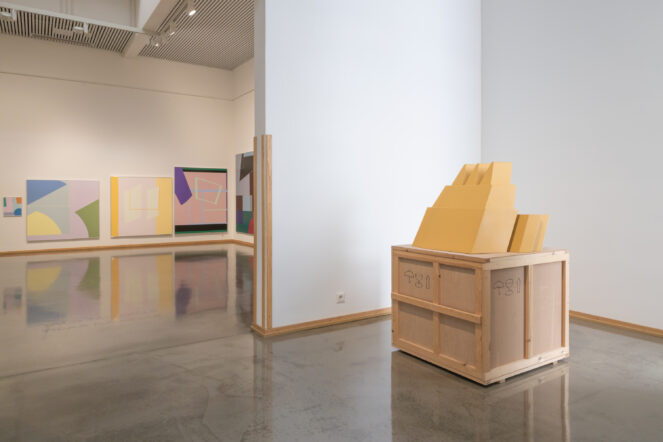
The collections of the foundation and the art museum have two storage facilities that provide museum-level conditions. Both collections are added to annually, meaning that in the long run the storage facilities will be filled. During the renovation of Rajakartano in 2022–2023, rearrangement of the facilities provided a new storage space for the collection. The new storage area houses a modern screen system with a hanging area of nearly 700 square metres.
Architect Matti Porkka drew sketches for a lot of the building’s details, including hanging rails and hooks, a handrail for the stairs, rubbish bins and coat racks. Rajakartano is an aggregate work of art in itself, combining practicality with beauty and Nordic design.
Art education and participation
The functions of the spaces within Rajakartano were carefully considered during the planning phase. According to acclaimed businessman Veli Aine, art education and supporting the development of artists were important aspects of the new museum and appropriate facilities had to be provided for these activities.
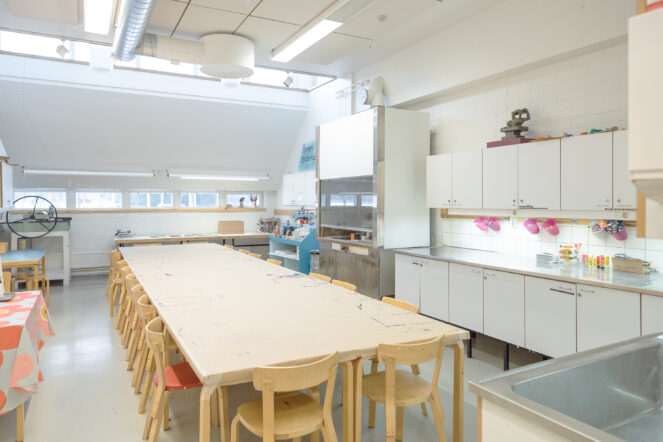
On the lower floor of the building, facilities were planned for making graphic art, sculpting and life drawing. In the 1990s, the facilities were adapted to new needs and a conservator was hired for the museum, with facilities for them provided in the former sculpting space.
The art education space remains one of the most popular and best-used facilities in Aine Art Museum. Museum pedagogy is a cornerstone of the work of the Aine Art Museum, and one third of the annual visitors to the museum are children and young people.
There is an abundance of the works of Artists Gösta Diehl (1899–1964) and Unto Pusa (1913–1973) in the collection of the Aine Pictorial Art Foundation. Diehl and Pusa were both born in what is now Vyborg and were pioneers of Finnish modern art. From 1946 to 1970, Unto Pusa was a teacher in the architecture department of what was then Helsinki University of Technology. From 1957, Diehl was a teacher of visual arts at the same institution.
Both artists also taught the designer of the Rajakartano building, Architect Matti Porkka, at Helsinki University of Technology.
Furniture
Rajakartano is filled with pearls of Nordic design. Architect Matti Porkka worked for more than ten years at the studio of Alvar Aalto in Helsinki before designing the Rajakartano building. The furniture and lights in the building are from Finnish furniture company Artek, one of the founders and designers of which was Alvar Aalto. At Rajakartano, you can find, among other things, Aalto’s iconic stools, slatted benches, ’Hand Grenade’ pendant lamps, armchairs, and a sofa designed by Artek’s artistic director, Ben af Schultén.
These classics of Nordic design make Rajakartano a timeless setting for exploring art and culture.
Renovations
In 2022–2023, Rajakartano underwent major renovations where, among other things, the building’s air conditioning underwent maintenance and was adapted to better suit both people and works of art. Efforts are made to keep works of art in conditions that are as stable as possible so that they are not affected by seasonal fluctuations. Flooding is a real threat in a city built around the Torne River. Veli Aine spoke of his relief when the art collection was finally moved to a safe building that could provide museum-standard conditions.
Looking back at the period before the museum became a reality, Veli Aine stated: “We were once faced with the threat of disaster when a flood forced waste water from the sewers into our basement. We really had to rush to get the paintings to safety. Now I can breathe easy,” said Aine. ”The waters of the Torne River rarely reach buildings on the riverbank.“
Marble from Lapland
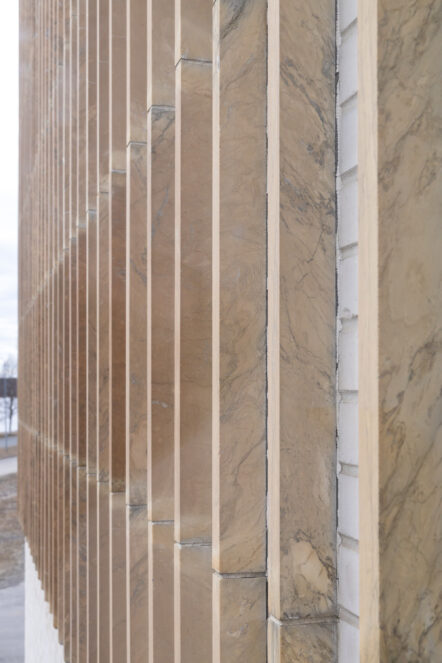
The materials used outdoors and indoors at Rajakartano are quarried Lapland marble from the village of Loue in Tervola. Lapland marble is a light grey, grey-brown or yellowish natural stone that has been used in locations such as inside the Presidential Palace and Parliament Building and on the floor of the National Library’s Cupola Hall in Helsinki, in Tornio Town Hall and in many other public buildings in northern Finland.
The marble was originally limestone, which turned into marble during the mountain range formation processes. The main minerals in the marble are dolomite and quartz. Lapland marble has been sold under the commercial name ’Lappia Ruska’. In 1954, Lapin Marmori Oy began using marble from Loue.
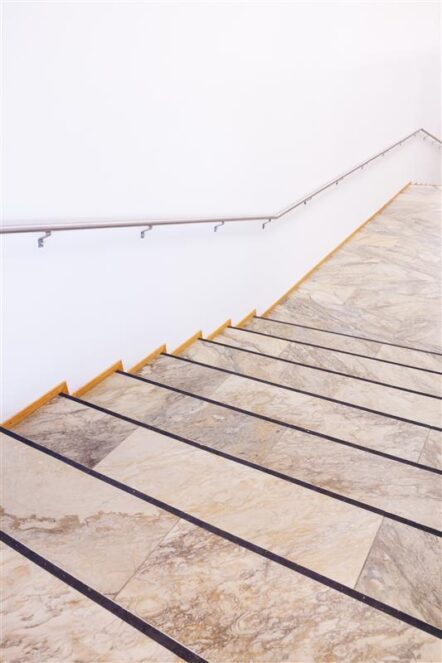
The interior stairs of the Aine Art Museum lead visitors to the functional spaces downstairs or to a bright and airy cafe upstairs and from there to exhibition spaces. The stairs are intentionally designed to be shallow and easy to navigate for visitors of various ages and sizes.
Architect Matti Porkka’s idea was that as the visitor climbs up the stairs from the small lobby of the museum, ”the brain cells turn towards art, the mind calms down”.