
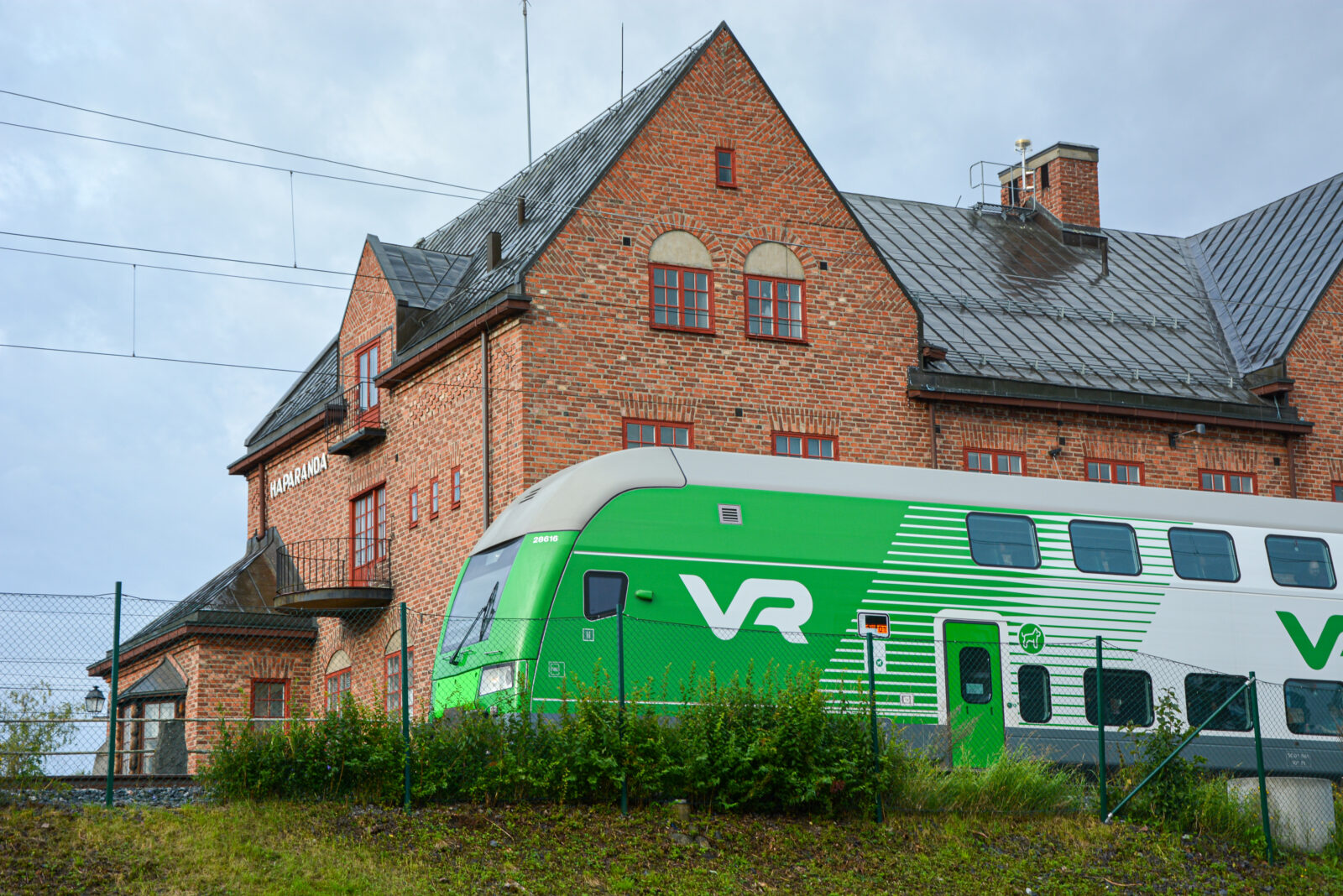
The Oulu–Tornio–Haparanda Rail Connection Opens a New Era for Mobility in the North.
On Monday, 10 August 2026, at 5:45 a.m. Swedish time, a new chapter was written in the history of northern transport when VR’s InterCity train IC 401 arrived at Haparanda station from Finland to Sweden. The launch of the Oulu–Tornio–Haparanda rail connection links the Finnish and Swedish railway networks and integrates Finland more closely into the Nordic and European rail system.
The new connection enables travel by land to Northern Sweden, Stockholm, and onward to Central Europe. At the same time, it creates new opportunities for tourism, commuting, students, and cross-border cooperation.
On the opening day, stations were filled with visitors welcoming the historic inaugural service. Music, speeches, and coffee refreshments helped create a festive atmosphere, while the Finnish and Swedish flags flew in celebration of the occasion. Passengers also embraced the new service from the very first day. Travelling by train from Helsinki to Northern Sweden or Norway is now considerably easier, as long-distance journeys can be made in an environmentally friendly way without the need for air or ferry travel.
The Result of Long-Term Efforts
The return of passenger rail services between Tornio and Haparanda is the result of years of dedicated work. The railway bridge connecting Tornio in Finland and Haparanda in Sweden was first opened in 1919. The bridge was built with dual gauge tracks, accommodating both the Finnish and European track widths. In 1988, passenger traffic on the Finnish side ceased when the remaining railbuses were withdrawn from service, and in 1992 services from Haparanda to Tornio also came to an end.
This new phase was made possible by funding decisions taken in 2021 by the Finnish Government and the National Emergency Supply Agency for the electrification of the Laurila–Tornio–Haparanda railway line. Construction work began in 2023 and included the renovation of railway bridges, the construction of underpasses, and the removal of level crossings. The completed electrification was celebrated in January 2025, after which attention shifted to launching passenger rail services.
The funding model itself is also an example of successful cooperation. The service is financed by the Finnish State through Traficom, the Cities of Tornio and Oulu, and the Sea Lapland Development Centre.
A Significant Step for Nordic Cooperation
The opening of the new rail connection is a significant step toward even closer Nordic cooperation. Cross-border transport links are a key factor in strengthening the vitality, competitiveness, and accessibility of border regions.
The Oulu–Tornio–Haparanda rail connection links the railway networks of Finland, Sweden, and Norway in a new way. Passengers can now travel by train, for example, from Helsinki via Haparanda and Kiruna to Narvik, or from Stockholm and Oslo via Tornio to Kolari. The connection expands opportunities for people to travel, study, work, and move across national borders.
However, the significance of the connection extends far beyond passenger transport. It strengthens the accessibility of the entire North Calotte region, supports the vitality of sparsely populated areas, and improves security of supply and overall resilience. The east-west rail corridor connects the ports and logistics networks of Finland, Sweden, and Norway more closely than ever before.
Development Work Continues
Although a historic milestone has now been achieved, the work does not end here. The next objectives are to further develop timetables, improve connections with Swedish operators, and strengthen cross-border cooperation in the north.
Improved accessibility will reinforce shared labour market in Torne Valley and service area. The cities of Tornio and Haparanda are becoming an increasingly important transport hub between Finland and Sweden, creating new opportunities for cooperation within the twin-city region. At the same time, the Bothnian Arc is becoming more closely integrated into the Nordic and European transport network.
The most important task now is to ensure that travellers discover and use the new connection. Initially, the route will be operated with two daily services, running every day of the week.
Article: City of Tornio and The Council of Torne Valley. Photo: Visit TornioHaparanda.